Infrastructure. At its simplest, it is the backbone of a nation: the roads that carry its people, the bridges that link its towns, the homes that shelter its families, the water systems that sustain its health, and the digital networks that connect it to the world. Without it, economic growth stalls, communities are cut off, and dreams remain just that: dreams.
Infrastructure. At its simplest, it is the backbone of a nation—the roads that carry its people, the bridges that link its towns, the homes that shelter its families, the water systems that sustain its health, and the digital networks that connect it to the world. Without it, economic growth stalls, communities are cut off, and dreams remain just that—dreams.
For Kenya, the story of infrastructure is the story of its nationhood. Since independence in 1963, every era has been marked by new roads, new buildings, and new connections. In the early years, the government prioritised roads and basic public facilities to knit together a young nation finding its footing. By the 1980s and 1990s, urban centres like Nairobi and Mombasa were expanding, though often outpacing planned development. Then came Vision 2030—a bold blueprint that placed infrastructure at the heart of Kenya’s transformation into a middle-income economy.
Kenya now spends close to 15% of its national budget on infrastructure development - over half a trillion shillings annually. Roads, bridges, housing, sewerage, digital networks—this is where the money flows, and where opportunities abound. Yet, for all this growth, one truth stands out: women and youth, who make up 70% of Kenya’s population, remain on the sidelines of this golden opportunity.
The 2024/2025 budget tells the story in figures. Ksh 217.3 billion has been allocated to constructing and maintaining roads and bridges, Ksh 120–128 billion to housing and urban development, and Ksh 12 billion to digital infrastructure. With additional private sector spending, infrastructure contributes 4.6% to Kenya’s GDP.
This is no small pie. It is a multi-billion-shilling industry that touches every county and every household. But when you look closer at who is benefitting, the gap is striking. Women make up just 7.3% of registered engineers, 15.5% of contractors and 17% of quantity surveyors. At the artisanal level—welders, masons, bricklayers, carpenters—women represent only 3%. The picture for youth is equally uneven. While many are involved, they often enter the industry as lowly paid manual labourers rather than skilled entrepreneurs or professionals.
The tide, however, is beginning to shift. Technical and Vocational Education and Training (TVET) enrolment reached 367,925 in October 2023, with women accounting for 45.4%. Industry exhibitions such as the Big 5 Construct are connecting Kenyan construction players with international ones. Programmes like Buildher are equipping women with technical and leadership skills. Government initiatives like the Access to Government Procurement Opportunities (AGPO) policy have reserved 30% of procurement opportunities for women, youth, and persons with disabilities. And bodies like the National Construction Authority (NCA), Kenya National Highways Authority (KENHA), and the National Industrial Training Authority (NITA) are stepping up certification and accreditation for artisans and contractors. Through certification, these entrepreneurs can offer their skills as consultants or trade experts.
In the digital age, the youth are also carving their space in infrastructure by laying fibre optic cables, setting up internet connections, and building the foundations of Kenya’s digital economy. Their agility with technology is positioning them as leaders in the digital infrastructure subsector.
Look around the counties and you will see the opportunities laid bare. Market centres are being modernised, schools expanded, health facilities upgraded, and new urban housing schemes are breaking ground. The government’s affordable housing project alone is reshaping towns and cities across the country, creating demand for skills in plumbing, welding, roofing, tiling, and project management. And the government is actively engaging MSMEs through the Kenya Association of Manufacturers and JuaKali Associations at the county level.
For women and youth willing to step into entrepreneurship, the barriers are real—limited financing, cultural biases, and systemic exclusion. Yet the potential is undeniable. They bring fresh perspectives, human-centred design, and innovative problem-solving. Their participation does not just benefit them; it creates more inclusive, resilient, and sustainable infrastructure for the entire country.
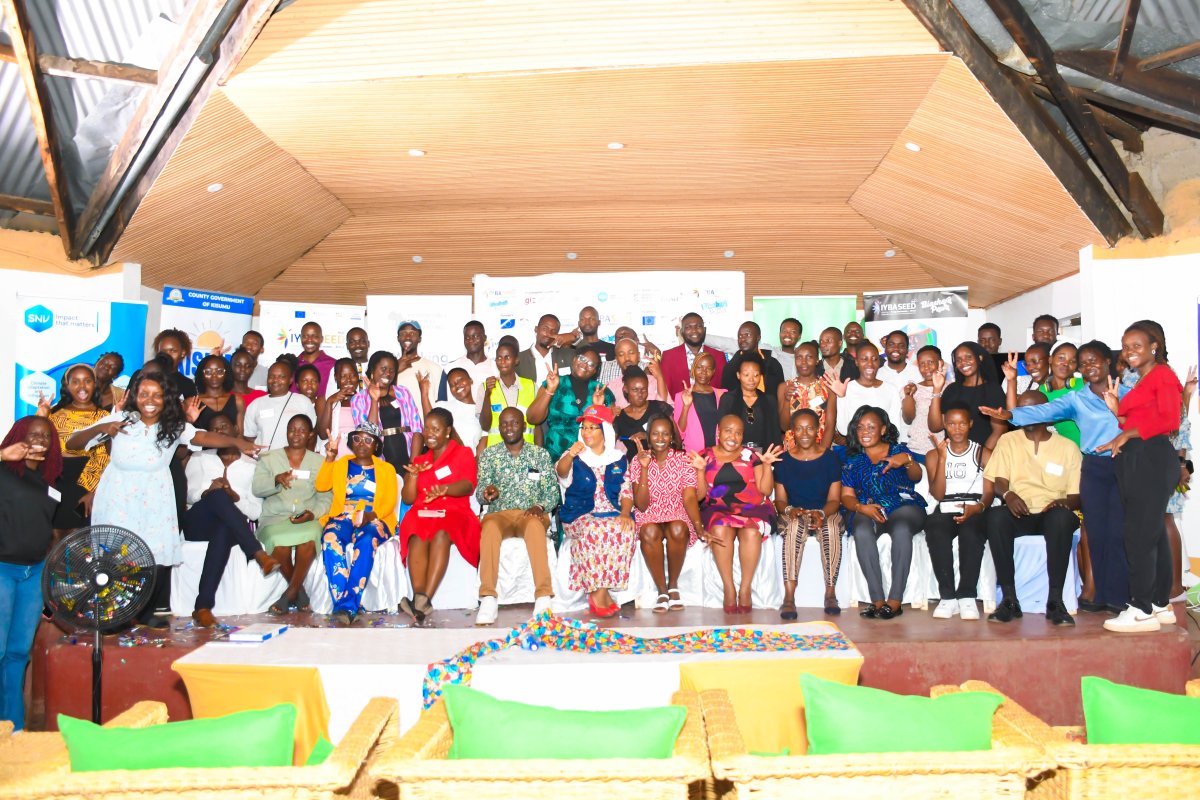
The IYBA-SEED programme though the BiasharaPawa initiative is stepping up to expand the space for women and youth entrepreneurship in the sector through dialogue events that foster networking, collaborations and partnerships. These dialogue events consider infrastructure development as one of the sectors facing women and youth underrepresentation that deserves support by bringing key stakeholders together. Through these dialogue events and media campaign, youth and women entrepreneurs in the sector have a platform to share knowledge, exchange ideas and learn from one another as well as learn from entrepreneurial support ecosystem players. The initiative also showcases the successful stories of women and youth entrepreneurs in the sector to inspire and motivate other entrepreneurs.
Infrastructure is where Kenya’s growth literally meets the ground. It is where policy, money, and opportunity intersect. And it is where women and youth must stake their claim - not tomorrow, but today.
If you are a young person or woman in Kenya the door is open. The policies (AGPO), programmes (TVET, Buildher, NCA certification), and demand (roads, housing, digital networks) are aligned. Get certified. Partner with others. Bid for opportunities. For those in Kisumu, Uasin Gishu and Nakuru counties, be on the lookout for the BiasharaPawa dialogue events to learn more.
Kenya’s story of infrastructure is still being written. The question is: will women and youth be at the margins or will they be at the heart of it shaping skylines, powering connections, and building the backbone of a stronger, more inclusive nation