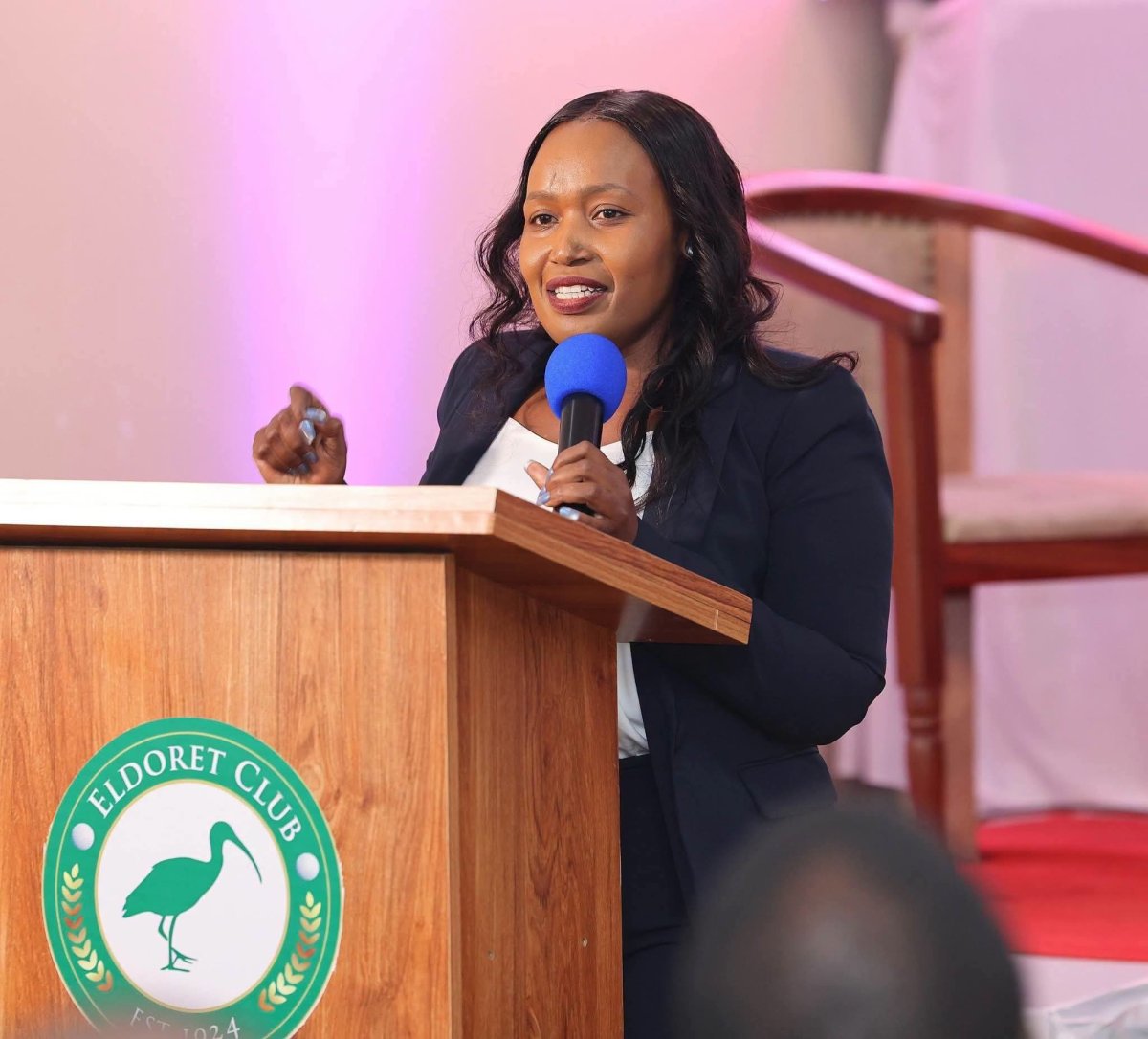
EldoHub CEO Magdaline Chepkemoi reflects on what AI really means for African entrepreneurs, breaking down the three stages of AI and why learning to use it is the defining skill of our generation.
By Chepkemoi Magdaline, HSC CEO & Founder, EldoHub
Something I usually tell entrepreneurs: "If you want to grow closer to God, start a business."
Because every day becomes a prayer.
"God, please let this client sign the contract."
"God, help me pay salaries this month."
"God, please let my proposal be accepted."
"God, help me survive this quarter."
Entrepreneurship has a unique way of making faith practical. It humbles you. It teaches you resilience. It forces you to learn, to adapt, and to become comfortable with uncertainty.
I know this because I have lived it.
Why I Started EldoHub
Over a decade ago, when I founded EldoHub, I didn't wake up one morning dreaming of working in technology. I wasn't chasing the latest trend. What kept me awake at night was a different question: “Why are so many talented young people graduating without opportunities? Why are entrepreneurs working so hard but struggling to grow? Why are businesses spending so much time on repetitive work instead of creating value?
I didn't fall in love with technology. I fell in love with solving problems. Technology simply became the tool.
Today, that tool has evolved into something far more powerful than anything we've seen before. It's called Artificial Intelligence.
Understanding AI: Three Stages Every Leader Should Know
Whenever people hear the words "Artificial Intelligence," they immediately think about ChatGPT. Some are excited. Others are terrified. Some even believe AI is coming to take all our jobs. But I'd like us to think about AI differently.
Think of AI as a journey; one with three distinct stages.
Stage 1: Traditional AI
Most of us have been using Traditional AI for years without even realising it. Traditional AI doesn't create content. Instead, it studies data, identifies patterns, and predicts what is likely to happen next. Every time Google Maps redirects you because of traffic, every time your bank detects suspicious activity on your account, every time Netflix recommends a movie or your phone predicts the next word you're about to type, that's Traditional AI at work. It helps us make better decisions because it learns from historical data.
Stage 2: Generative AI
This is where the world is today. Generative AI creates. It writes reports, drafts proposals, designs graphics, summarises meetings, generates presentations, and even helps write speeches. Tools like ChatGPT, Gemini, Claude, and Perplexity have made this technology available to anyone with a smartphone.
I use these tools almost every day — not because they replace my thinking, but because they give me a head start. They help me spend less time on routine work and more time on the work that only human beings can do: leading teams, making decisions, building relationships, and solving complex problems.
Stage 3: Agentic AI
Perhaps the most exciting stage is where we're heading now. Agentic AI doesn't just answer your questions. It works on your behalf. Imagine waking up in the morning and finding that your AI assistant has already sorted your emails, responded to routine inquiries, scheduled your meetings, reminded you about important deadlines, updated your customer database, and prepared a summary of the day's priorities. It doesn't simply generate information; it executes tasks. That future is no longer science fiction. It's already here.
The Real Competition Isn't AI — It's Each Other
So, should we be afraid? I don't think so. But I do think we should be learning. History has taught us this lesson before.
When calculators arrived, accountants weren't replaced. When Excel was introduced, finance professionals weren't replaced. When Google became available, teachers weren't replaced. The professionals who learned to use those tools simply became more valuable than those who refused to adapt.
AI is no different. And that brings me to the heart of this conversation:
AI will not replace you. But a person using AI will.
Imagine two entrepreneurs. Both own similar businesses. One spends six hours every day preparing quotations, replying to emails, creating marketing content, and writing reports. The other spends one hour doing the same work because AI prepares the first draft, organises information, creates marketing content, and summarises customer feedback.
Who now has more time to think strategically? Who has more time to meet customers? Who has more time to innovate? Not necessarily the smarter entrepreneur, the entrepreneur who has learned to use AI.
That is the real competition.
What This Means for Africa's Economy
I genuinely believe Artificial Intelligence is one of the greatest opportunities we have to build resilient economies, drive competitiveness, and create shared prosperity across Africa.
If you're a farmer, AI can help predict weather patterns, detect crop diseases, and identify better markets. If you're in healthcare, AI can reduce paperwork and support faster diagnosis. If you're a lawyer, it can summarise hundreds of pages of legal documents before you apply your expertise. If you're in government, it can improve service delivery and decision-making. And if you're an entrepreneur, it can help you write better proposals, understand your customers, create marketing campaigns, analyse your finances, and become more productive.
The question is no longer whether AI is coming. It has already arrived. The real question is whether we are willing to learn.
As leaders, our responsibility is not just to prepare ourselves. It is to prepare our businesses, our teams, our institutions, and our children for a future that looks very different from the one we grew up in.
A Final Thought
Every generation has a defining technology. Electricity transformed industries. The internet transformed communication. Artificial Intelligence is transforming human productivity.
Those who ignore it will struggle to compete. Those who embrace it will create opportunities we cannot even imagine today.
So tomorrow morning, instead of asking yourself, "Will AI replace me?", ask a different question:
“How can AI help me become the best version of myself?"
Because the future doesn't belong to the people who know everything. It belongs to the people who are willing to keep learning.
And remember…
AI will not replace you.
But someone who knows how to use AI probably will.