
By Chepkemoi Magdaline, HSC Founder & CEO, EldoHub
When the world talks about Artificial Intelligence today, the conversation is almost exclusively dominated by Silicon Valley billionaires, billion-dollar server farms, and the race for artificial general intelligence. But here in Kenya, looking out from our hubs in Uasin Gishu and beyond, the conversation we desperately need to be having is entirely different.
By 2030, Africa will be home to the world’s largest working-age population. Yet, as the global economy hurtles toward an AI-driven future, we risk building a digital divide far wider than the one we are currently trying to close. To change this trajectory, we must act with intention. Policy and investment levers such as establishing rural tech hubs, providing targeted public funding for digital skills outside major cities, incentivizing the development of local AI solutions, and expanding infrastructure for high-speed internet in underserved areas are clear, actionable strategies. If our approach to digital skilling remains concentrated in capital cities like Nairobi, Lagos, and Cape Town, the AI revolution will simply bypass the majority of the continent.
To truly power Africa’s digital economy, we cannot build from the top down. We must build from the grassroots up. We must start Mashinani.
The Blind Spot of the Tech Ecosystem
For over a decade, I have worked at the last mile of technology and business development. I have seen firsthand the communities that traditional hiring pipelines and venture capitalists rarely reach.
The prevailing narrative is that brilliant tech talent is scarce. The reality is that talent is everywhere, but opportunity is severely geofenced. We have institutionalized a system where a young coder in a rural county feels they must migrate to the capital to be seen, while local Micro, Small, and Medium Enterprises (MSMEs), the undisputed backbone of our economy, are left using analog systems in a digital world.
AI and advanced digital skills shouldn’t be luxury exports reserved for urban elites. They are survival tools for the modern economy. A local agribusiness needs data analytics just as much as a multinational. A peri-urban logistics SME needs automated, intelligent routing. But who is going to build, deploy, and manage these systems for them?
The Mashinani Blueprint: A Proven Model
At EldoHub, we recognized early on that the solution isn’t just basic computer literacy; it is high-tier, future-proof skilling deployed exactly where the talent lives. We call this the “Mashinani Blueprint”, a framework that proves decentralized innovation works. The Mashinani Blueprint is anchored on several key pillars: first, delivering advanced digital and AI skills in rural and peri-urban communities through localized training hubs; second, building strong community leadership and mentorship structures to foster participation and sustain impact; third, forging partnerships with local MSMEs to ensure training matches real market needs; and fourth, creating pathways to employment and entrepreneurship through digital apprenticeships and startup support. Together, these pillars make the framework not only effective but also replicable in diverse contexts across the continent.
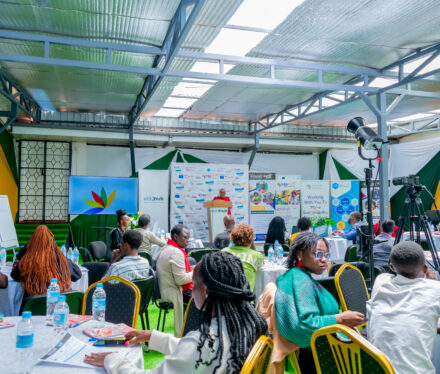
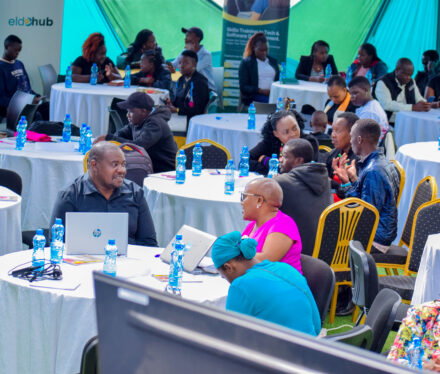
Through the EldoHub Coding & AI Academy and our community-led Techlabs Mashinani, we are introducing deep-tier skills like AI, Data Science, and Software Development to youth who have historically been locked out of the ecosystem. But training in a vacuum creates frustration, not economic growth.
That is why we built SasaKazi, a digital apprenticeship platform that connects these vetted, high-tier junior tech professionals directly with traditional MSMEs. The result is a dual-engine of economic transformation: young people gain decent employment and experiential learning, while MSMEs gain access to affordable, high-quality talent to digitize their operations.
The numbers speak for themselves. This grassroots approach has enabled us to facilitate over 10,000 digital career placements and digitize more than 1,000 SMEs. Furthermore, by providing the right mentorship and investor-readiness, we have helped mobilize over $772,000 in capital for high-growth startups operating outside the usual urban bubbles. We track our impact not just by the scale of participation, but also by key outcomes, including SME revenue growth, job retention rates among our trainees, and the sustained use of digital tools within local businesses. Annual follow-ups allow us to measure improvements in business operations, long-term employment stability, and broader community benefits, such as increased local investment and entrepreneurship. These measurable results demonstrate both immediate success and lasting transformation, offering a proven case for continued investment.
A Call for Decentralized Investment
Empowering the grassroots is not a charitable endeavor; it is the most logical economic strategy for the continent. When you equip a woman running an SME with digital tools through programs like Biz Mashinani, or when you give a young person in a rural hub the confidence to write their first line of code, you trigger a ripple effect that transforms entire communities.
As global investors, policymakers, and tech giants look to Africa as the next frontier for AI and digital growth, my challenge to them is this: Stop focusing only on capital cities.
Redesign your funding models. Shift your employer expectations. Invest in the hubs, the academies, and the platforms that are doing the heavy lifting at the last mile. To accelerate this shift, I urge investors and policymakers to take specific, pragmatic steps: launch pilot funds focused on rural and peri-urban tech innovation; support policy pilots that align digital skills training with local economies’ needs; and create public-private partnerships to directly bridge financing and technical know-how to grassroots initiatives. Establish mentorship exchanges between established tech firms and local hubs. Fund infrastructure grants and provide catalytic capital where conventional investment is scarce. Africa’s digital transformation will not be written in a boardroom; it is being coded right now, mashinani, by resilient innovators who are finally getting the access they deserve.
It is time we meet them where they are.