Is the problem we are addressing the correct one in African e-commerce?
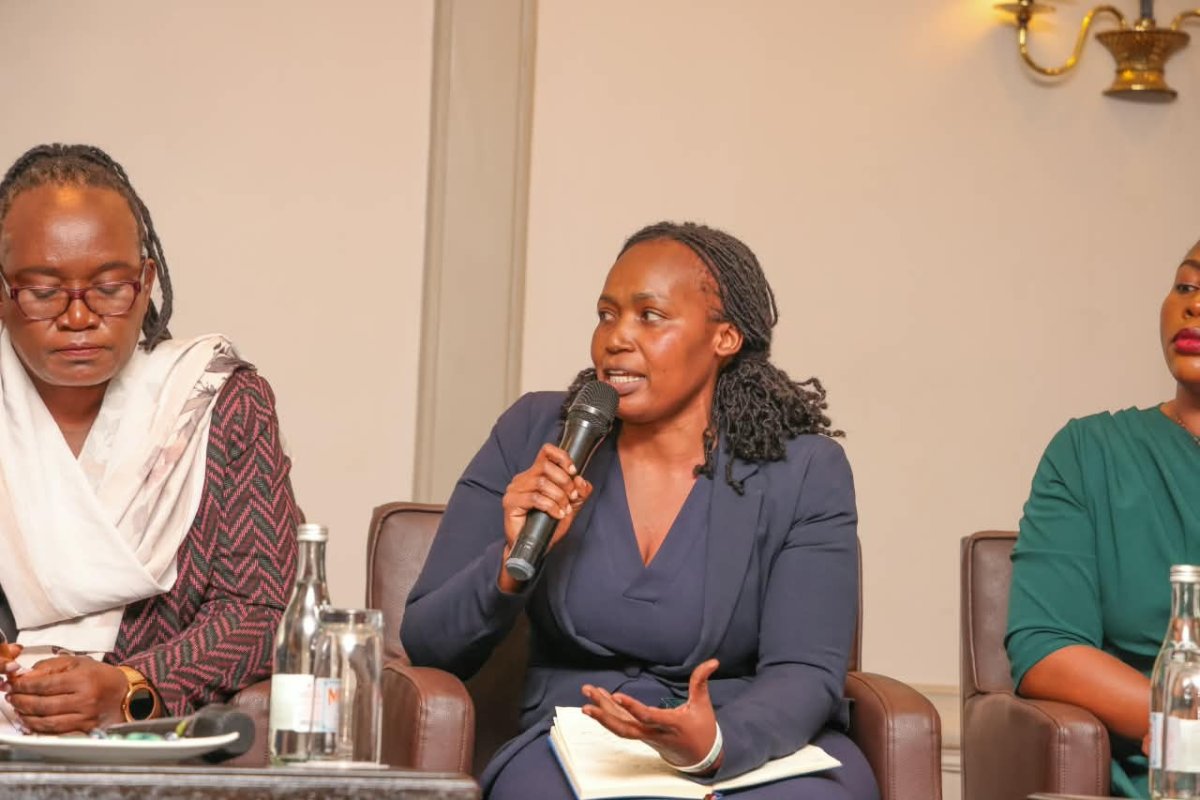
Recently, Magdaline Chepkemoi, who is our Founder and Executive Director, took part in a panel organised by the World Bank at the Kenya’s Digital and AI Dividend workshop.
Together with people from the government, the private sector and academia, they discussed a key question: What is, in fact, preventing e-commerce in Kenya from progressing?
The discussion usually ends up focusing on getting businesses online. However, experience we've gained working with entrepreneurs in Eldoret shows that getting online is no longer the main obstacle. Small businesses are already established in this regard and sell every day through WhatsApp, Facebook, Instagram, and TikTok. Social selling is doing well.
The actual difficulty lies in getting these entrepreneurs to move on from social selling to setting up a business that is both functional and scalable.
Magdaline offered three important insights during the panel on what it actually will take to build the infrastructure needed behind the digital storefront.
1. Logistics is the real bottleneck. Although you can train a woman in Eldoret to become an excellent digital marketer, enabling her to take photographs of her products, post them on WhatsApp, and smoothly receive payment through M-Pesa, what occurs when a customer in Mombasa wishes to buy her product? She is then confronted with a number of difficult questions: Who is going to deliver it? What will the cost be? And what will happen in the case of a return? Since the cost of delivering a product priced at KES 1,000 is KES 700 in shipping, the e-commerce problem has not actually been solved.
In order for e-commerce to function, the three essential flows information, finance, and physical logistics must all operate in conjunction. At present, small businesses are blocked by the physical logistics aspect.
2. The county e-commerce hubs must be considered part of the commerce infrastructure. The World Bank has suggested setting up county e-commerce hubs, but as Magdaline pointed out, if we just construct rooms with computers and Wi-Fi they will fail. Success cannot be measured by the number of people who are trained or by the number of computers that are installed.By drawing on the example of the Taobao Villages in China, these centres should act as comprehensive commerce infrastructure. A small business owner should have the opportunity to go in and receive assistance with product photography, packaging, digital marketing, digital payments, and most important of all, access to cheap, consolidated delivery networks. The real measure of success is the number of orders that actually pass through the system and the amount of income that is generated.
3. The process of formalization should be like a ladder, not a cliff. Social commerce is attractive to a large number of women since it is flexible—there are no registration fees, no obligations towards the platform, and no fixed working hours. We should not be surprised, then, if a small seller decides to remain informal when formalizing the business at once brings in taxes, permits, and all sorts of paperwork without providing any real advantages.
We should stop thinking about how to make informal businesses register and begin to consider how we can make the process of registration worthwhile. Formalization must be like a ladder, not a cliff; it should begin with simple and low-cost entry and then increase in scope as the business grows. Above all, registration should open up opportunities: giving access to affordable finance, logistics assistance, training, and larger marketplaces.
WhatsApp has already provided small businesses with a digital storefront, and our next task as an ecosystem is to develop the physical and financial infrastructure needed to enable them to scale.
We have great thanks to the World Bank for having organised this essential discussion, and to all the various parties who are working on building a more inclusive digital economy in Kenya.